Leopard Gecko's Aggressive Tumors Hold Key to Cancer Breakthrough
Scientists discover new models for cancer and Alzheimer's research
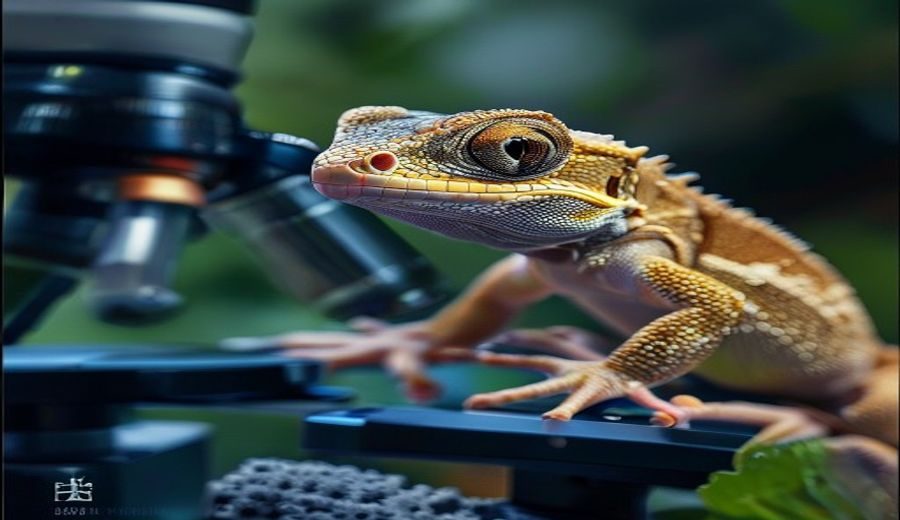
Uncovering the Secrets of Cancer with a Pet Gecko
A recent study published in Health & Medicine News -- ScienceDaily has found that a leopard gecko that naturally develops aggressive tumors may become an important new model for cancer research. According to the study, the gecko's tumors share key genetic changes with human cancers, offering a rare opportunity to study the disease as it develops naturally. This discovery is significant, as it could provide scientists with a unique chance to understand the underlying mechanisms of cancer and develop more effective treatments.
The gecko's ability to develop tumors is a result of a genetic mutation that causes its cells to grow and divide uncontrollably. This process is similar to what occurs in human cancers, where genetic mutations can lead to uncontrolled cell growth and tumor formation. By studying the gecko's tumors, scientists may be able to identify new targets for cancer therapy and develop more effective treatments. As cancer research continues to evolve, the use of animal models like the gecko will play a crucial role in advancing our understanding of the disease.
As Health & Medicine News -- ScienceDaily reports, the discovery of the gecko's tumors has sparked excitement among scientists, who believe that this new model could lead to significant breakthroughs in cancer research. With the gecko's tumors sharing key genetic changes with human cancers, scientists may be able to use this model to test new treatments and develop more effective therapies. As research continues, it is likely that the gecko will become an important tool in the fight against cancer.
In the context of cancer treatment, the discovery of the gecko's tumors is a reminder that there is still much to be learned about the disease. While significant progress has been made in recent years, cancer remains a complex and multifaceted condition that requires continued research and innovation. By studying the gecko's tumors and developing new models for cancer research, scientists may be able to uncover new secrets about the disease and develop more effective treatments.
The Hidden Skeleton Inside Brain Cells
Researchers have made a groundbreaking discovery about the role of a microscopic skeleton inside neurons, which could have significant implications for the treatment of Alzheimer's disease. According to a study published in Health & Medicine News -- ScienceDaily, this skeleton acts as a gatekeeper that controls what brain cells absorb and when they absorb it. When this protective structure weakens, neurons rapidly take in harmful proteins associated with Alzheimer's disease, suggesting that stabilizing it could become a promising new strategy for preventing brain cell damage.
The discovery of the skeleton's role in brain cells is a significant breakthrough, as it highlights the importance of maintaining the integrity of the neuronal cytoskeleton. This network of protein filaments provides structural support to neurons and plays a crucial role in maintaining their function. When the cytoskeleton is damaged, neurons can become vulnerable to harmful proteins and other toxins, leading to cell death and contributing to the progression of Alzheimer's disease.
As researchers continue to study the role of the skeleton in brain cells, they may be able to develop new therapies that target this structure and prevent the progression of Alzheimer's. By stabilizing the cytoskeleton and preventing the uptake of harmful proteins, scientists may be able to slow or even halt the progression of the disease. This could have significant implications for the treatment of Alzheimer's, which currently affects millions of people worldwide.
In the context of Alzheimer's research, the discovery of the skeleton's role in brain cells is a reminder that there is still much to be learned about the disease. While significant progress has been made in recent years, Alzheimer's remains a complex and multifaceted condition that requires continued research and innovation. By studying the role of the cytoskeleton and developing new therapies that target this structure, scientists may be able to uncover new secrets about the disease and develop more effective treatments.
The Bottom Line
The discoveries of the pet gecko's tumors and the hidden skeleton inside brain cells are significant breakthroughs in the fight against cancer and Alzheimer's disease. These findings highlight the importance of continued research and innovation in these fields, and demonstrate the potential for new models and therapies to be developed. As scientists continue to study these discoveries, they may be able to uncover new secrets about these diseases and develop more effective treatments.
- The pet gecko's tumors share key genetic changes with human cancers, making it a potential new model for cancer research.
- The microscopic skeleton inside neurons acts as a gatekeeper that controls what brain cells absorb and when they absorb it, and stabilizing it could become a promising new strategy for preventing brain cell damage.
- Continued research and innovation are crucial for advancing our understanding of cancer and Alzheimer's disease, and for developing new and effective treatments.
- The use of animal models like the gecko and the study of the neuronal cytoskeleton will play a crucial role in advancing our understanding of these diseases.
- By studying these discoveries and developing new therapies, scientists may be able to uncover new secrets about cancer and Alzheimer's disease and develop more effective treatments.
🚀 Built by Mapt
Like this site? Mapt builds websites, brands & growth engines — over text.