Target's AI Edge
The retail giant's SVP reveals its secret to staying ahead in the AI race
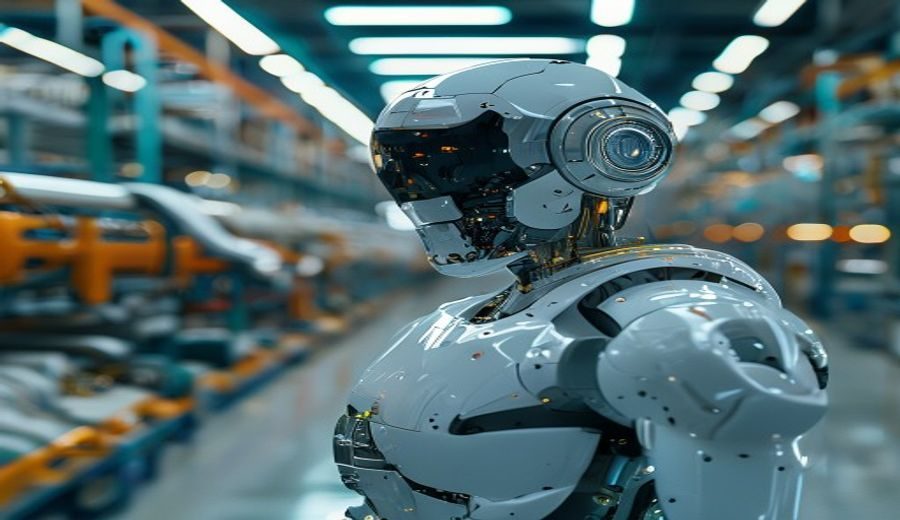
As the AI landscape continues to evolve, companies are looking for ways to stay ahead of the curve. For Target, the key to its success lies not in the AI models themselves, but in the infrastructure built around them. According to Siobhán Mc Feeney, Target's SVP, the company's AI moat is everything built around the models, from the data collection to the deployment process. This approach has allowed Target to create a competitive advantage in the retail space.
Target's AI Strategy
Mc Feeney's comments, made at the VB Transform 2026 conference, highlight the importance of a well-rounded AI strategy. While many companies are focused on developing the most advanced AI models, Target is taking a more holistic approach. By investing in the infrastructure that supports its AI models, the company is able to get more out of its AI investments. As Mc Feeney noted, the models are just one part of the equation - it's the discipline and process that goes into building and deploying them that really matters.
This approach is particularly important in the current AI moment, where every enterprise wants to leverage AI agents. However, as Mc Feeney pointed out, not everything needs an AI agent. By being selective about where it deploys AI, Target is able to maximize its returns on investment. This disciplined approach is a key part of the company's AI strategy, and it's one that other companies would do well to follow.
As VentureBeat reported, Mc Feeney's comments were made in the context of the VB Transform 2026 conference, where she was speaking about the company's approach to AI. Her comments highlight the importance of a well-rounded AI strategy, one that takes into account not just the models themselves, but the entire ecosystem that supports them.
Bright Machines' Hybrid Robot Cell
Bright Machines, a San Francisco-based manufacturer, is tackling one of the most significant challenges in the AI buildout: the issue of quality data when human operators are involved in the production line. The company's new Hybrid BRC (Bright Robotic Cell) is designed to address this problem by allowing human operators to step inside a sensor-monitored robotic cell and perform prescribed assembly steps without breaking the digital record.
This innovation has the potential to solve a major AI infrastructure bottleneck, as reported by VentureBeat . By enabling human operators to work seamlessly with robotic cells, Bright Machines is helping to ensure that quality data is maintained throughout the production process. This is a critical issue in the AI buildout, where high-quality data is essential for training and deploying effective AI models.
The Hybrid BRC is an expansion of Bright Machines' Bright Factory platform, which is designed to support the development of AI-powered manufacturing systems. By providing a seamless interface between human operators and robotic cells, the platform is helping to drive the adoption of AI in the manufacturing sector.
As the manufacturing sector continues to evolve, innovations like the Hybrid BRC are likely to play a critical role in driving the adoption of AI. By addressing the issue of quality data, Bright Machines is helping to ensure that AI models are trained on high-quality data, which is essential for their effectiveness.
Runlayer vs Rippling
Runlayer, a startup that developed an MCP gateway product, is suing Rippling for allegedly stealing its product idea. According to TechCrunch , Rippling evaluated Runlayer's product and then opted to build one itself, prompting the lawsuit.
This case highlights the challenges faced by startups in the AI space, where intellectual property is often a critical issue. As the AI landscape continues to evolve, companies are looking for ways to protect their IP and prevent theft.
The lawsuit is a reminder that the AI space is highly competitive, and companies are willing to do whatever it takes to get ahead. However, as Startups | TechCrunch reported, the lawsuit also highlights the importance of protecting intellectual property in the AI space.
As the case unfolds, it will be interesting to see how the court rules on the issue of IP theft. The outcome is likely to have significant implications for the AI industry, where IP protection is critical for innovation and growth.
Ozlo's Sleepbuds 2
Ozlo's Sleepbuds 2 are the company's first major update to its sleep earbuds, which introduce longer battery life, improved connectivity, enhanced audio, and new sleep features. As Startups | TechCrunch reported, the update is a significant improvement over the previous model and continues the product line once abandoned by Bose.
The Sleepbuds 2 are designed to provide a better sleeping experience, with features such as white noise and relaxation techniques. The update is a significant improvement over the previous model, with longer battery life and improved connectivity.
The Sleepbuds 2 are a great example of how AI is being used to improve our daily lives. By providing a better sleeping experience, the Sleepbuds 2 are helping people to get the rest they need to function at their best.
As the AI landscape continues to evolve, we can expect to see more innovations like the Sleepbuds 2. By leveraging AI and machine learning, companies are creating products that are designed to improve our lives and make us more productive.
GM's AI-Powered Engineering Workflows
General Motors (GM) has redesigned its engineering workflows around AI agents, with significant results. According to Rashed Haq, GM's VP of autonomous vehicles, the company's software engineers spend only 15% of their time writing code, with the rest of their time focused on higher-level tasks.
The use of AI agents has enabled GM to accelerate its engineering workflows, with a significant increase in merged pull requests and faster releases. As VentureBeat reported, the company's autonomous driving division is now using AI agents to analyze vehicle data, triage problems, and run experiments.
The results are impressive, with a roughly threefold increase in merged pull requests and faster releases. The use of AI agents has enabled GM to streamline its engineering workflows, freeing up its software engineers to focus on higher-level tasks.
This is a great example of how AI is being used to drive innovation in the automotive sector. By leveraging AI and machine learning, companies like GM are creating more efficient and effective engineering workflows, which is critical for the development of autonomous vehicles.
The bottom line
The stories highlighted above demonstrate the significant impact that AI is having on various industries, from retail to manufacturing to automotive. As companies continue to invest in AI, we can expect to see more innovations like those described above.
The key takeaways from these stories are:
- Target's AI strategy is focused on building a competitive advantage through its infrastructure, rather than just its models.
- Bright Machines' Hybrid BRC is helping to solve a major AI infrastructure bottleneck by enabling human operators to work seamlessly with robotic cells.
- Runlayer's lawsuit against Rippling highlights the importance of protecting intellectual property in the AI space.
- Ozlo's Sleepbuds 2 are a great example of how AI is being used to improve our daily lives, with features such as white noise and relaxation techniques.
- GM's use of AI agents has enabled the company to streamline its engineering workflows, with significant results.
🚀 Built by Mapt
Like this site? Mapt builds websites, brands & growth engines — over text.